If you love the crunch of chips but not the oil that comes with deep frying, you are not alone. More and more Indian families are asking a simple question: are dehydrated vegetable chips really better than the fried snacks we grew up eating? In this blog we compare dehydrated vegetable chips vs fried snacks on 7 real points: cooking method, oil, calories, nutrition, taste and shelf life. No big claims, only honest differences, so you can decide what goes into your snack jar.
Table of Contents
What Are Dehydrated Vegetable Chips?
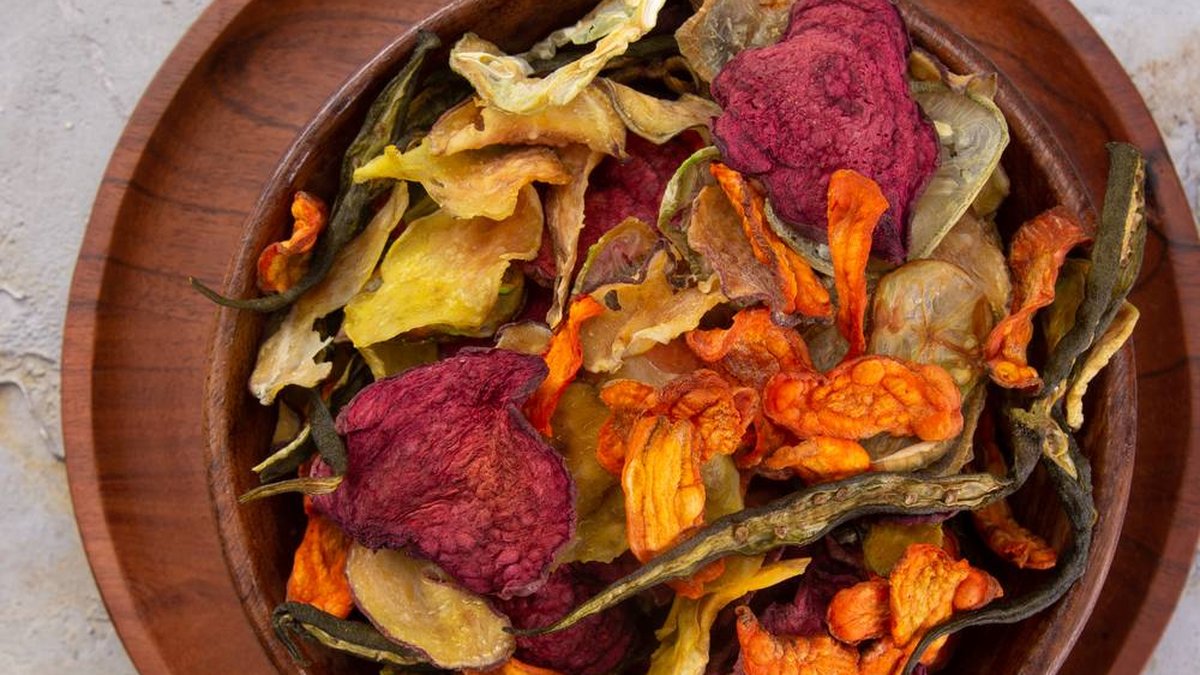
Dehydrated vegetable chips are real vegetables, like bhindi (okra), beetroot, carrot, sweet potato and cluster beans, that are sliced and gently dried at a low temperature until they turn crisp. Because the water is removed slowly instead of frying the slices in hot oil, dehydrated vegetable chips keep their natural colour, flavour and fibre. At HealthyGrabz, we add only a light spray of olive oil (less than 1%) and real spices after drying, so the vegetable stays the hero of the pack.
What Are Fried Vegetable Snacks?
Fried vegetable snacks are made by dropping vegetable slices into hot oil, usually at a high temperature. The slices absorb oil as they fry. That is what gives fried snacks their rich taste, and also what makes them heavy. Most packed namkeen-style snacks, banana chips and potato wafers are made this way, and the same frying oil is often reused again and again through the day.
Dehydrated Vegetable Chips vs Fried Snacks: 7 Real Differences
1. Cooking Method
Fried snacks are deep fried in oil at high temperature. They are gently dried at low heat, with no deep frying at all. This one difference decides almost everything else on this list.
2. Oil Content
Fried snacks soak up oil while cooking, which is why your fingers shine after eating them. Dehydrated vegetable chips are not cooked in oil. HealthyGrabz chips get only a light spray of olive oil, less than 1%, just enough to carry the spices.
3. Calories
Oil is the most calorie-dense part of any snack. Because they carry far less oil, these chips are usually much lighter in calories than the same quantity of fried snacks. You get the crunch without the heaviness.
4. Nutrients and Fibre
High frying heat can damage some of the heat-sensitive vitamins in vegetables. Gentle dehydration keeps more of the vegetable’s natural fibre and nutrients, so they stay closer to the real vegetable you started with.
5. Trans Fat
Frying oil that is heated again and again can form trans fats, which doctors ask us to avoid. They are never cooked in oil, so there is no trans fat from frying in the pack.
6. Taste and Texture
Fried snacks taste rich, but they can feel greasy and heavy after a few handfuls. Dehydrated vegetable chips are naturally crispy and light, with a real vegetable flavour that does not hide behind oil.
7. Shelf Life
The oil inside fried snacks can turn rancid and start smelling old. With almost no oil inside, they stay fresh and crunchy for longer when stored in an airtight jar.
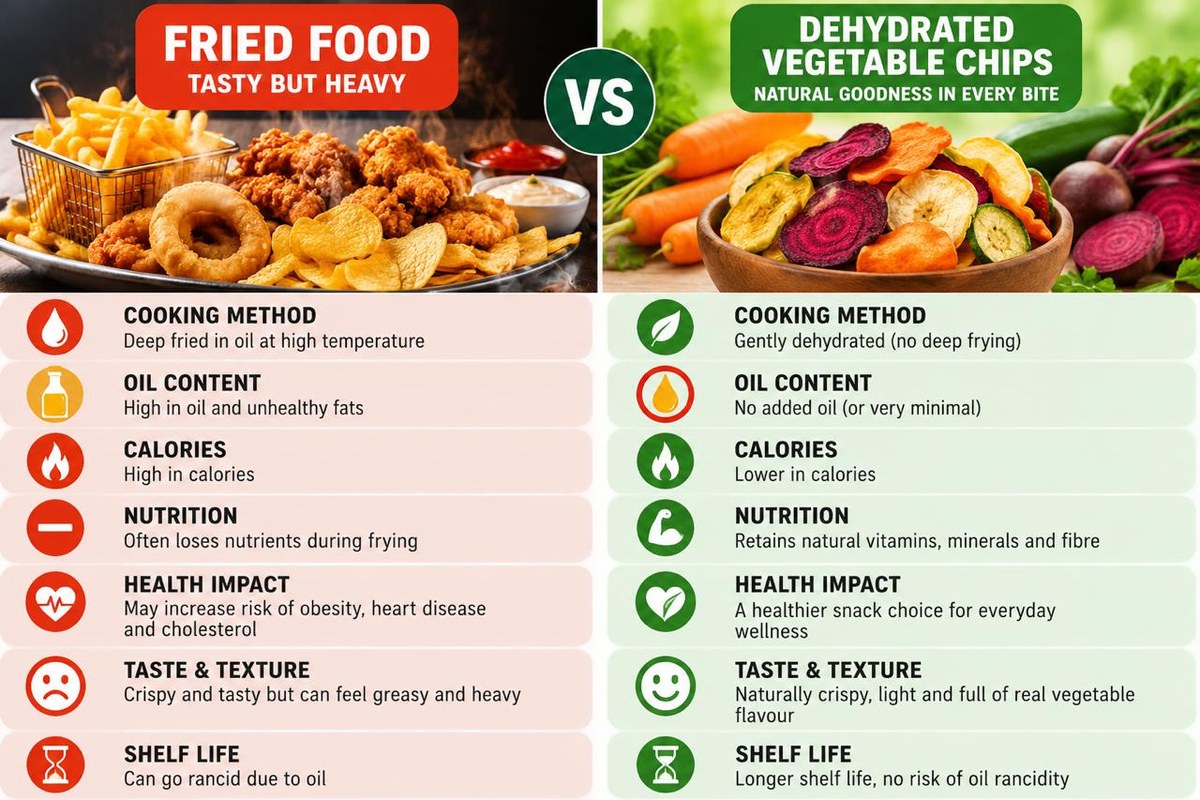
Fried Snacks vs Dehydrated Vegetable Chips: Quick Comparison
| Point | Fried Vegetable Snacks | Dehydrated Vegetable Chips |
|---|---|---|
| Cooking method | Deep fried in oil | Gently dehydrated, no deep frying |
| Oil content | High, slices absorb oil | Only a light olive oil spray (less than 1%) |
| Calories | High | Lower, because of far less oil |
| Fibre and nutrients | Partly lost in high heat | Better retained |
| Trans fat | Can form in reused frying oil | None from frying |
| Feel after eating | Heavy, greasy | Light and crispy |
| Shelf life | Oil can go rancid | Stays fresh longer |
How HealthyGrabz Dehydrated Vegetable Chips Are Made
Every pack of HealthyGrabz dehydrated vegetable chips follows the same simple 4 steps: fresh vegetables from the farm, careful washing and cutting, gentle dehydration and air-cooking, and finally a light spray of olive oil with real spices. You can see the full process with photos from our unit, and if you are wondering how air-cooking compares with deep frying, read our air-cooked vs deep-fried chips comparison.
So Which Snack Should Go in Your Jar?
Fried snacks are fine once in a while, and nobody is asking you to give them up forever. But for daily tea-time, office desks, travel bags and kids’ tiffins, dehydrated vegetable chips are the lighter everyday choice. Even FSSAI’s Eat Right India movement asks us to cut down on oil little by little, and switching your daily snack is the easiest place to start.
A good rule for most homes is simple: keep the fried snacks for the occasional celebration, and keep dehydrated vegetable chips for the everyday crunch. You do not have to give up taste, because the masala, the crispness and the satisfaction are all still there. You are only leaving behind the oil bath.
FAQs on Dehydrated Vegetable Chips
Are dehydrated vegetable chips healthy?
They are a better choice than deep-fried snacks because they are made with far less oil and keep more of the vegetable’s natural fibre. Like any snack, enjoy them in normal portions as part of a balanced diet. If you have a medical condition or follow a doctor-prescribed diet, always follow your doctor’s advice first.
Do dehydrated vegetable chips contain oil?
Plain dehydrated chips need no oil at all. HealthyGrabz chips get only a light spray of olive oil, less than 1%, for taste.
Can children eat dehydrated vegetable chips?
Yes. They are made from real vegetables, with no deep frying and only a light olive oil spray, so they fit easily into a school tiffin or an evening snack box.
Are dehydrated chips the same as air-fried chips?
Not exactly. Dehydration removes water slowly at low heat, while air frying uses hot air to crisp food quickly. HealthyGrabz chips are gently dehydrated and air-cooked, never deep fried.
Dehydrated Vegetable Chips for Every Indian Moment
One reason dehydrated vegetable chips fit so easily into daily life is that they go everywhere a fried snack goes, and a few places it cannot:
- Tea-time: the 4 pm craving in most Indian homes is real. A small bowl of bhindi or beetroot chips with chai gives the same crunch as a handful of namkeen, with far less oil.
- Office desks: no greasy fingers on the keyboard, no heavy feeling before the evening meeting.
- Travel: trains, road trips and flights all demand snacks that stay crisp in a bag. Dehydrated vegetable chips travel well because there is no oil to leak or go stale.
- Kids’ tiffins: real vegetable slices with real spices are an easy yes from parents, and the natural colours of beetroot and carrot chips make the box look fun.
- Festive gifting: jars of colourful vegetable chips make a healthier gift hamper than the usual fried namkeen and sweets.
How to Store Dehydrated Vegetable Chips
Because dehydrated vegetable chips have almost no moisture and almost no oil, storing them is simple. Keep them in an airtight jar away from direct sunlight and they stay crisp for weeks. If your kitchen is humid, drop a small food-safe silica packet into the jar. Avoid refrigerating them, because condensation can make the chips soft. If a chip ever loses its crunch, a few minutes in an air fryer or a warm oven brings the crispness right back.
How long do dehydrated vegetable chips stay fresh?
In an airtight jar, they easily stay crisp for several weeks. Fried snacks, on the other hand, start losing freshness as soon as their oil is exposed to air.
The Crunchy Conclusion
When you compare dehydrated vegetable chips vs fried snacks honestly, the difference is simple: same crunch, far less oil, and more of the real vegetable in every bite. If you would like to taste the difference, try our Mix Vegetable Chips Jar, our bestselling Okra (Bhindi) Chips, or the Fruit & Veggie Chips Combo and find your family’s favourite. Every jar is made in small batches from real vegetables, packed fresh, and shipped across India. One small switch in your snack jar can change how your whole family munches, one crunchy bite at a time.